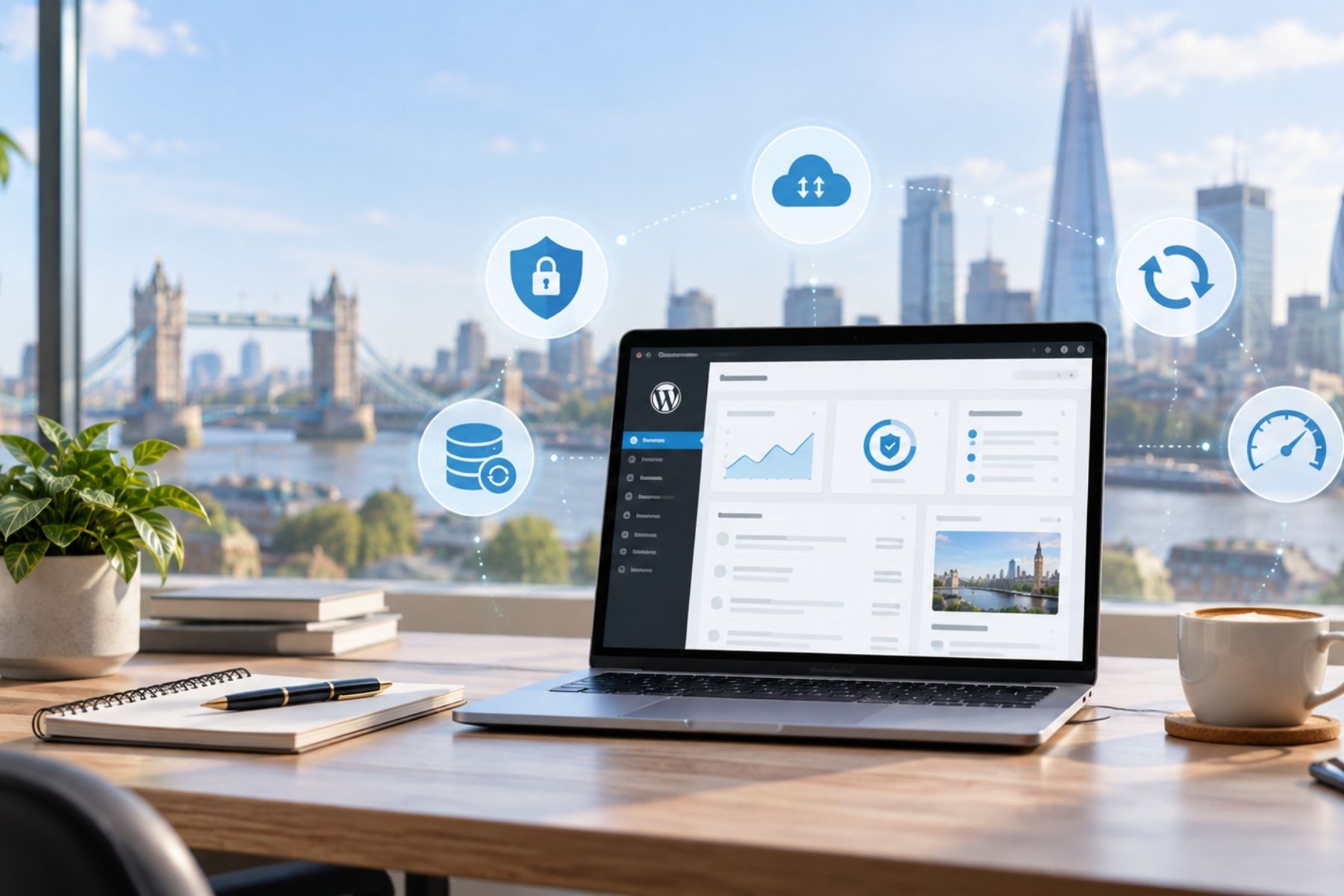
WordPress website maintenance dashboard showing security, backups, updates and performance monitoring with the London skyline in the background.

How to Keep Your WordPress Website Secure, Updated and Running Smoothly

A WordPress website is not something you should build once and then forget about.

Like any piece of software, WordPress needs regular updates, backups, security checks, and maintenance to keep it working properly. Without this, small issues can gradually turn into bigger problems such as broken pages, slow performance, security vulnerabilities, or even website downtime.

The good news is that keeping a WordPress website healthy does not need to be complicated.

Keep WordPress, Plugins and Themes Updated

One of the most important things you can do is keep WordPress itself, your plugins, and your theme up to date.

Updates often include security fixes, bug fixes, compatibility improvements, and new features. Running outdated software can increase the risk of security problems and may also cause conflicts with newer versions of WordPress or PHP.

However, updates should still be handled carefully.

If your website is important to your business, it is a good idea to make a backup before major updates and check the website afterwards to make sure everything still works as expected.

Use Reliable Plugins and Themes

WordPress has thousands of plugins available, but that does not mean you should install every plugin you find.

Too many unnecessary plugins can make a website harder to maintain and may affect performance or security.

Choose plugins and themes from reputable developers, keep them updated, and remove anything you no longer use.

An inactive plugin can still become a security risk if it remains installed and outdated.

Make Regular Backups

Backups are essential.

If something goes wrong during an update, your website is hacked, or files become corrupted, a recent backup can save a significant amount of time and stress.

Your backups should include both the website files and the database.

It is also better to keep at least one backup outside the same server where the website is hosted. If the server itself has a problem, you still have another copy available.

How often you need backups depends on how frequently your website changes.

A simple business website may only need daily or weekly backups, while an active WooCommerce store may require much more frequent backups.

Protect Your Login Area

Your WordPress admin area should be properly protected.

Use strong, unique passwords and avoid sharing administrator accounts between multiple people.

Two-factor authentication can add another layer of protection, especially for websites containing customer data, online orders, or sensitive business information.

It is also worth removing old user accounts when they are no longer needed and giving users only the permissions required for their role.

Monitor Website Security

Security is not only about passwords.

A well-maintained WordPress website should also have protection against common attacks, suspicious login attempts, malicious requests, and known vulnerabilities.

Your hosting environment, firewall, malware protection, and WordPress security setup all work together.

Security monitoring can help identify problems early rather than waiting until something visibly breaks.

Keep an Eye on Website Performance

Over time, websites can become slower.

Large images, outdated plugins, excessive scripts, database clutter, and poor hosting can all affect performance.

Regularly check your most important pages on both desktop and mobile devices. Test forms, navigation, checkout pages, booking systems, and other important features.

A website that is technically online but slow or partly broken can still cost your business customers.

Check Your Website Regularly

Some problems are very simple to spot if you actually visit the website.

Check that contact forms still send emails, phone numbers are correct, links work, SSL is active, and important pages display properly.

If you run an online store, complete a test order occasionally to make sure payments, emails, shipping, and checkout are working correctly.

Regular Maintenance Is Worth It

WordPress is a reliable platform, but it still needs attention.

Regular updates, backups, security monitoring, and performance checks can reduce the chance of unexpected problems and help your website stay fast, secure, and dependable.

For a business, your website is often working 24 hours a day.

Looking after it regularly is far easier than trying to repair it after something has already gone wrong.


Commonly asked questions and answers

Phone:
07932 323209
How much does a website cost?
The cost of a website depends on the size of the project, the number of pages, the design requirements, and the features your business needs. A simple brochure website will usually cost less than a larger website with advanced functionality or an online shop.

Our standard website projects start from £400, with most small business websites costing between £800 and £1,200. eCommerce websites start from £800, although the final price will depend on the number of products, payment options, delivery requirements, and any additional integrations.

Before providing a quote, we’ll discuss your business, the purpose of the website, the pages you need, and any features you would like to include. You’ll then receive a clear, itemised quotation within 1–2 working days, so you know exactly what is included before deciding to proceed.
Most small business websites take approximately 2–4 weeks to design, build, test, and prepare for launch. Smaller websites with ready-to-use content may be completed sooner, while websites with more pages, custom features, or additional integrations may require more time.

eCommerce websites usually take around 3–5 weeks, depending on the number of products, payment and delivery setup, product information, and any third-party integrations that need to be configured.

The project timeline begins once the required content, images, access details, and project information have been provided. Delays can occur if content or feedback is not available when needed, so we’ll keep you informed throughout the project and let you know what is required at each stage.
Yes. Your website will be built using an easy-to-manage content management system, allowing you to update text, images, pages, blog posts, products, and other content without needing to write code.

Before the website goes live, we can show you how to make common updates, such as editing page content, adding images, managing products, and updating basic website information.

If you prefer not to manage the website yourself, we can also provide ongoing maintenance and support. This may include content updates, plugin updates, security checks, backups, troubleshooting, and general technical assistance.
Launching your website is not the end of the process. Once your website is live, we can continue to support you with technical assistance, WordPress updates, security checks, backups, performance monitoring, and ongoing improvements.

If you notice a problem after launch, or if you need help making changes, you can contact us and we’ll review the issue. We’ll explain what needs to be done and recommend the most suitable solution.

For clients who want ongoing protection and support, we also offer website maintenance, managed WordPress hosting, regular backups, security monitoring, and performance optimisation.

The level of support depends on the service you choose, so we’ll explain what is included before you start.
No reputable SEO provider can guarantee a number-one position on Google. Search rankings depend on many factors, including competition, search demand, website quality, technical performance, content, location, and ongoing changes to search algorithms. Google itself advises businesses to be cautious of anyone promising guaranteed first-place rankings.

What we can do is give your website a strong SEO foundation. This may include improving the website structure, making important pages easier for search engines to understand, addressing technical issues, improving page speed, optimising on-page content, and ensuring the website provides a clear experience for visitors.

SEO is an ongoing process rather than a one-time guarantee. Results can take time and will vary depending on your industry, competitors, website history, and the amount of work involved. We focus on practical improvements that help your website become more visible to relevant people over time.

Newsletter subscribe!

Enter your email to unlock an exclusive 10% discount on professional website development tailored to your business needs.
Subscription Form

Have more questions?

Let’s schedule a short call to discuss how we can work together and contribute to the success of your project or idea.